Next-Gen T7 RNA Polymerase: Solving the dsRNA Dilemma
Emerging mRNA applications demand stricter dsRNA control
As the mRNA technology platform continues to evolve, emerging applications such as in vivo gene therapy, in vivo CAR-T cell therapy, and antibody replacement therapies are placing increasingly stringent demands on product quality. Because these non-vaccine mRNA-based therapeutics typically require high-dose administration, the industry is paying close attention to double-stranded RNA (dsRNA) byproducts. Since dsRNA readily triggers innate immune responses, its presence introduces significant uncertainties regarding clinical efficacy and safety.
In mRNA in vitro transcription (IVT), T7 RNA polymerase is a cornerstone of mainstream manufacturing due to its simple structure and high transcription efficiency. However, it also plays a key role in the formation of dsRNA byproducts. While downstream purification methods, such as cellulose nitrate membrane filtration, can remove dsRNA, they often come with drawbacks like complex workflows, reduced yields, and higher costs. Consequently, shifting dsRNA control upstream to inhibit byproduct formation at the source has become the industry’s preferred strategy
Mechanisms Underlying the Generation of Three Major dsRNA Types
Research indicates that the formation of dsRNA primarily occurs through three distinct mechanisms (Fig. 1):
-
3’-end extension (Turnaround transcription): After transcription is complete, if T7 RNA polymerase fails to dissociate promptly, it can reverse-transcribe a complementary strand using the mRNA as a template, thereby forming dsRNA. This occurs because T7 RNA polymerase possesses RNA-dependent RNA polymerase activity and exhibits an excessively strong binding affinity for the mRNA
-
Random Priming of Abortive Transcripts: T7 RNA polymerase randomly recognizes internal mRNA sequences and reverse-complements them to synthesize a complementary strand, resulting in dsRNA formation.
-
Anti-sense Transcription: T7 RNA polymerase recognizes the linearized ends of the DNA template and initiates transcription to synthesize the complementary strand, which also leads to dsRNA formation.
Notably, two of these mechanisms—random priming and anti-sense transcription—are driven by T7 RNA polymerase acting independently of the T7 promoter.
Premium T7 RNA Polymerase: Breaking the Deadlock at the Source
Based on a deep understanding of its structure and mechanism, KACTUS has engineered the T7 RNA polymerase through rational design. Combining extensive testing and feedback from representative customers, we have successfully launched our second-generation Premium T7 RNA polymerase (trade name: MaxPure™ T7 RNA Polymerase).
While maintaining high mRNA yields and sequence integrity, this enzyme demonstrates significant performance advantages:
1. Significantly reduces dsRNA byproducts: Verified in real-world application scenarios across multiple customers, it is particularly outstanding in self-amplifying RNA (saRNA) transcription (Fig. 2).
2. Enhances co-transcriptional capping efficiency: Compared to the first-generation T7, the Premium T7 RNA polymerase can achieve high capping efficiency at lower concentrations of Cap analogs without affecting transcription yield or integrity (Fig. 3).

Figure 1. Schematic diagram of the mechanisms for dsRNA formation[1]

Figure 2. Premium T7 RNA Polymerase generates significantly lower dsRNA byproducts with different templates.

Figure 3. Premium T7 provides higher capping efficiency than 1st-gen T7 at low cap concentrations, while maintaining yield and integrity.
Suitable for High-Temperature Reactions, Further Reducing dsRNA Byproducts
Appropriately increasing the reaction temperature helps reduce dsRNA byproducts. To evaluate the Premium T7 RNA Polymerase under high-temperature conditions, we systematically examined the effect of temperature on the enzyme’s transcriptional performance (Fig. 4).
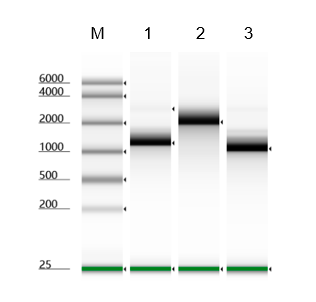
In a 9700-nt self-amplifying RNA (saRNA, Case 1) and a 4300-nt mRNA (Case 2) transcription system, increasing the reaction temperature to 39°C and 42°C further reduced the level of dsRNA byproducts. With the exception of Case 1, which showed a slight decrease in integrity (approximately 5 percentage points) at 42°C, transcription yields remained unaffected across all other conditions.
In practical process development, the reaction temperature can be appropriately increased according to specific requirements to further reduce dsRNA byproducts.

Figure 4. IVT reaction temperature affects Premium T7 performance.
Outstanding Stability: Compatible with mRNA GMP Production
In the GMP manufacturing of mRNA therapeutics, the stability of key raw materials is directly linked to the robustness of the manufacturing process and batch-to-batch consistency. To address this critical need, we conducted comprehensive stability testing on the Premium T7 RNA Polymerase (Fig. 5). The results demonstrate that it is:
-
Resilient to Repeated Freeze-Thaw Cycles: After undergoing seven freeze-thaw cycles, the enzyme exhibited virtually no significant decline in activity.
-
Stable at Room Temperature and 37°C: In accelerated stability studies at 25°C and 37°C, the enzyme retained nearly 90% of its activity after seven days.
This outstanding stability not only effectively mitigates the risk of raw material loss caused by operational fluctuations but also provides significant convenience and reliable assurance for scaling up and standardizing mRNA production.

Figure 5. Stability of Premium T7 under different treatment conditions.
Related Products
|
Cat. No. |
Product Name |
|
Premium T7 RNA Polymerase, GMP grade |
|
|
Premium T7 RNA Polymerase |
|
|
T7P-EE102 |
T7 RNA Polymerase Kit |
|
T7 RNA Polymerase |
|
|
GMP-T7P-EE101 |
T7 RNA Polymerase, GMP grade DMF Filed |
References
-
Understanding and Overcoming the Immune Response from Synthetic mRNAs: New England Biolabs focuses on the formation and detection of dsRNA byproducts during in vitro transcription. December 2019, Genetic Engineering & Biotechnology News 39(12):56-58. DOI:10.1089/gen.39.12.15