



AAV Capsid Optimization and Precision Quantification: Customized AAV ELISA Detection Solutions
By Yujiao Zhang
June 4, 2025
Recent posts


Adeno-associated virus (AAV) has become a key viral vector in gene therapy due to its low pathogenicity and ability to achieve long-term gene expression across various tissues. As of now, eight recombinant AAV victors (rAAV)-based drugs have been approved globally as commercial gene therapy products. However, experience from clinical trials and late-stage programs has revealed several pressing challenges that must be addressed, including:
-
Dose-dependent toxicity: High doses can easily trigger immune responses, liver injury, thrombotic microangiopathy, neurotoxicity, and other adverse effects.
-
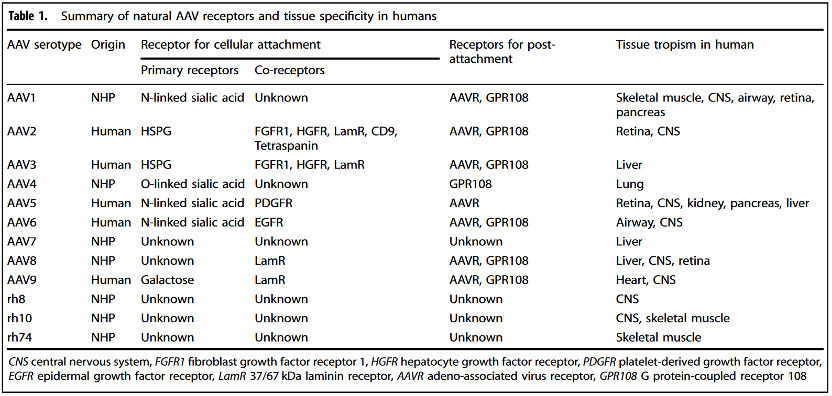
Limitations of natural capsids: Native AAV capsid structures may show suboptimal tissue tropism, limited vector capacity, and high risk of pre-existing immunity.
-
Manufacturing bottlenecks: Certain AAV preparations exhibit aggregation or variable capsid loading, complicating the purification process and downstream analytics.
As a result, capsid optimization has become a "standard step" in AAV therapy development.
I. Capsid Optimization: From a “Better Option” to a “Clinical Necessity”
Optimizing the AAV capsid aims to overcome the shortcomings of natural capsids, such as poor tissue specificity, and to prevent therapeutic genes from being expressed in non-target tissues. It also seeks to enhance the ability to specifically target certain tissues—such as muscle—and to solve issues related to low delivery efficiency.
Driven by clinical needs, there is also a strong push to improve safety, reduce liver toxicity, and prolong the duration of gene expression. These demands have raised the bar for identifying superior AAV capsids.
Currently, directed evolution, AI-based design, and chimeric capsid strategies are all being applied to AAV capsid optimization and precision quantification workflows.
II. Precision Quantification of Capsids: The "Lifeline" of Efficacy and Safety
Robust AAV characterization depends on monitoring Critical Quality Attributes (CQAs) such as AAV capsid titer, purity, and integrity directly determines product quality. As AAV products enter key research stages, it is essential to establish standardized quantitative detection methods to fully characterize parameters such as AAV capsid titer and purity. Among these, accurate quantification of AAV capsid titer is particularly critical:
-
Establishing rational dosing regimens: The total amount of AAV capsids affects both the efficacy and safety of the therapy. High doses may trigger immune responses, leading to adverse reactions or even toxicity.
-
Guiding downstream manufacturing processes: Precise quantification of total capsids helps manage product loading during purification and formulation stages—not just potency.
III. ELISA: The "Gold Standard" for AAV Capsid Quantification
Multiple methods are currently available for characterizing AAV capsids. Among them, ELISA remains a cornerstone method for precise quantification of AAV capsid proteins, offering high specificity, reproducibility, and compatibility with regulated environments. Using well-characterized monoclonal antibodies, ELISA supports consistent AAV capsid titer determination across batches and AAV samples.
Comparison of Different Methods:
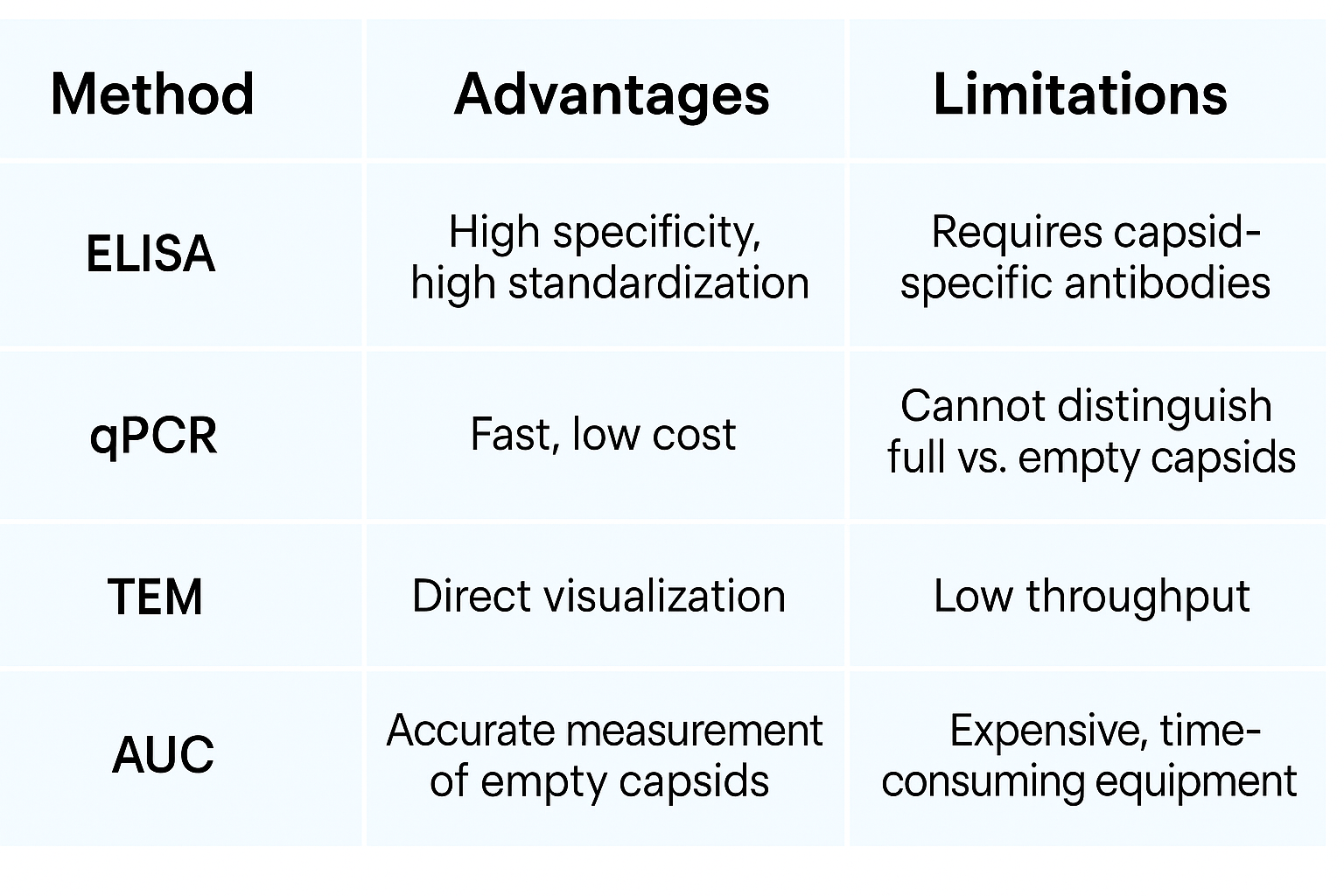
However, optimized AAV capsids still face significant detection challenges. For example, commercial kits often fail to detect capsids developed through directed evolution or chimeric design, as antibodies may not effectively recognize the altered epitopes of such capsids. Meanwhile, developing in-house methods can be time-consuming and costly. As a result, custom ELISA kits have emerged as a breakthrough solution.
IV. Customized ELISA Solutions
To address the lack of detection tools for optimized AAV capsids, KACTUS offers custom AAV Capsid ELISA Kit development services, with the following core technical advantages:
-
Specific antibody development: Design of antibodies targeting mutated capsids, with recombinant monoclonal antibody production to reduce lot-to-lot variability in ELISA kits.
-
Method validation: Includes data support for linear range, sensitivity, and other key metrics.
-
Short delivery timeline: From antibody development to kit delivery in as little as 4 months.
Contact us at support@kactusbio.us or reach out to your local sales representative to customize your AAV capsid ELISA detection solution.

60 Hickory Drive
Waltham, MA 02451
United States
AVV Capsid Optimization and Precision Quantification